Until recently, cocktails were a rarity at baseball stadiums. Beer was far easier to grab on the go, and getting rowdy fans liquored up was in no one’s best interest. Liquor was limited, sometimes exclusively to air-conditioned suites where cosmopolitans could be sipped far from the masses. And yet, on Memorial Day weekend, I found myself squeezed into the stands at Wrigley Field drinking a mai tai, next to a stranger drinking a margarita.
My seatmate and I were having Cutwaters, a line of canned cocktails from Anheuser-Busch. The stadium’s beer stand offered canned Long Island iced teas, canned palomas, even canned espresso martinis. Alcohol companies have been trying to make the idea of portable cocktails stick for more than a century, and they have finally succeeded. In 2025, Americans consumed nearly 11 billion servings of ready-to-drink cocktails, according to IWSR, a data firm that tracks trends in the alcohol industry. Depending on your state, you can now buy Cutwaters at CVS, Walmart, and Trader Joe’s. A four-pack, which contains about six to eight shots’ worth of liquor, will run you $12 or so.
The road to canned-cocktail ubiquity was paved by so-called malternatives: bubbly, fruity, portable drinks that are technically made from a component of beer but taste like nothing of the sort. Whereas early beer alternatives such as Coors Zima never really took off, products such as White Claw found mass appeal in the late 2010s and early 2020s, thanks in part to their low alcohol content; at 5 percent, they seemed like the perfect drink for an American populace that was facing down the reality that drinking is not good for your health. But the new breed of prepackaged cocktails represents a strange inversion. Cutwater, BuzzBallz, and BeatBox—three of the most popular brands—sell sweet, fruity flavors that clock in at 7 to 15 percent alcohol. (Cutwater also sells standard cocktail flavors, including Bloody Mary and “gin Collins.”) Even White Claw is getting in on the high-proof canned-drink market: In 2021, the brand launched Surge, an 8 percent version of its signature seltzer.
[Read: Why Millennials love canned cocktails]
U.S. beer sales still dwarf those of canned cocktails, as evidenced by the plastic pint glasses that littered the stands of Wrigley. But ready-to-drink cocktails have emerged as a rare bright spot for the alcohol industry, which has seen business slump in recent years. Year-over-year sales of premixed cocktails jumped by 40 percent in 2025, according to data from the market-research firm Circana, whereas beer sales were slightly down.
Since the repeal of Prohibition, states have taken care to make sure that liquor is harder to access than other libations because of its high alcohol content. Many states allow hard drinks—including mixed ones—to be sold only at designated liquor stores. States have also historically taxed liquor at a higher rate than beer and wine to discourage consumption.
But the spirits industry has been pushing for change so that it can sell more cans. First, malternatives got around liquor laws because they contained similar ingredients to beer’s. Now the Distilled Spirits Council of the United States, which lobbies for liquor companies, is arguing that canned cocktails should be sold anywhere beer is because they can have approximately the same alcohol content as beer (in some cases, a very, very strong beer). In a statement, the council told me that more than half of the ready-to-drink cocktails sold are less than 5 percent alcohol. But the higher-proof options are still selling remarkably well. Anheuser-Busch recently announced that Cutwater, which doesn’t make a single drink below 7 percent, is by far the most popular spirit-based canned-cocktail brand.
[From the July/August 2021 issue: America has a drinking problem]
In the past five years, four states have changed their laws to allow the sale of canned cocktails anywhere beer or wine is sold. (Although states set a cap for how much alcohol can be in a grocery-store canned cocktail, that limit typically allows many high-ABV products to be sold.) Taxes on canned cocktails have also been slashed in multiple states. Meanwhile, BuzzBallz makes both liquor and wine versions of its neon-colored, orb-shaped drinks so that they can be sold in the most settings possible. Jess Scheerhorn, the president of BuzzBallz, told me in an email that this is a “widely adopted practice” across the alcohol industry. She also emphasized that the company supports moderation for drinkers.
The United States’ newfound thirst for higher-alcohol drinks is somewhat perplexing: After all, the percentage of Americans who say they do not drink is at an all-time high. Still, most Americans do drink, and as the cost of all sorts of consumer goods goes up, many people are reaching for cheaper versions of their favorite beverages. Canned cocktails fit that bill. Plus, a bright-blue, berry-cherry-limeade-flavored BuzzBall adds a layer of goofiness to heavy drinking that, say, a handle of Fireball lacks. It also looks cuter on Instagram.
Some drinkers might not realize how much booze they’re really consuming. People regularly post online about how they threw back two or three Cutwaters and were surprised to find themselves hammered, as if they’d been wholly unaware that they had, in fact, been binge drinking. (Under the official definition, two Piña Colada Cutwaters in two hours lands squarely in binge-drinking territory.) Some videos are recorded from hospital beds. In one TikTok with nearly 400,000 likes, a woman suggests that Cutwater gets its customers so destroyed because its products are secretly cut with fentanyl. (They are not.) A spokesperson for Anheuser-Busch told me in an email that the company “has a longstanding commitment to responsible drinking, and we market our products responsibly.” (White Claw’s parent company did not respond to a request for comment.)
[Read: Not just sober-curious, but neo-temperate]
To be fair, the amount of liquor in these drinks is not a secret. Most alcoholic beverages list their strength on the package, and Cutwater cans additionally advertise the number of shots of liquor in each can. But Cutwaters have become so notorious for causing accidental blackouts that drinking an entire four-pack has become its own social-media challenge. The White Claw generation, used to pounding cans of seltzers at backyard barbecues and feeling nothing more than a light buzz, doesn’t yet seem to understand how to responsibly partake in these new products. People may see having one can of cocktail versus multiple boozy seltzers as moderating their drinking, Marten Lodewijks, the president of IWSR, told me. (They may also think they’re making a healthier choice by taking in fewer calories.) “Consumers often use packaging as a shortcut for what counts as a single serving or socially acceptable amount,” Logan Pant, a marketing professor who has studied consumers’ perception of alcohol, told me in an email.
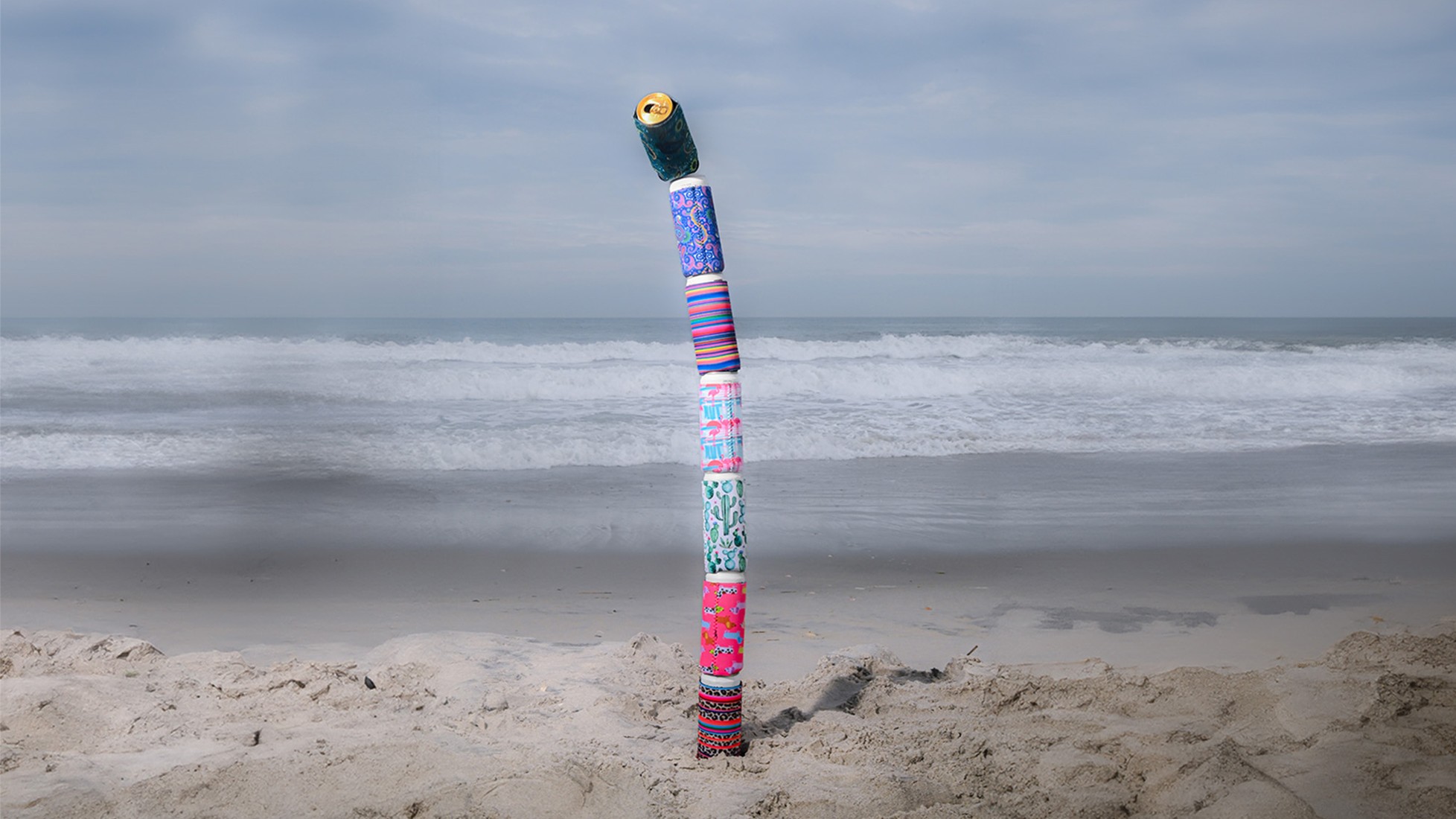
The problem, in short, might be the can. I knew how much liquor was in my mai tai, but as the Cubs game slowed down around the fifth inning, I decided to have another. Even though I knew that this wasn’t the best choice for a Saturday afternoon, I took some solace in the fact that I had only two empties at my feet.