By the time Fabian Müller met the patient at the center of his newest research paper, he was fairly certain that an experimental treatment was her last hope. The patient, a 47-year-old mother of two, had for years been battling three severe autoimmune diseases, all of which were triggering her body to attack components of her blood. Her doctors had made nine separate attempts to treat her conditions, but none of them had worked. By the start of 2025, she’d been confined to a hospital in Dresden, Germany, for more than two months, being dosed with multiple immunosuppressive drugs and receiving up to three daily transfusions of red blood cells, as her care team tried and failed to control a massive disease flare.
In desperation, the woman’s care team reached out to Müller, a hematologist-oncologist at the University Hospital of Erlangen, a roughly three-hour drive away by ambulance. In recent years, he and his colleagues have made a name for themselves pioneering experimental CAR-T cell treatments—a type of personalized immunotherapy originally developed for cancer—against a variety of autoimmune diseases, with promising early results. Small studies of CAR-T, as well as early results from several ongoing clinical trials, show that many people with autoimmune disease go into remission after treatment; some patients are now years out from CAR-T cell therapy and remain in good health without the help of any drugs. Müller hopes that this latest patient—the most complex autoimmune case to receive the treatment to date—will soon be able to say the same. She received CAR-T treatment early last year and has since returned to a mostly normal life. After years of being intermittently lashed to machines and tubes, she hasn’t needed a hospital stay in many months. (The patient has asked to remain anonymous to protect her privacy, Müller told me.)
Müller and other CAR-T researchers are cautious about forecasting the future of their technology. CAR-T is brand-new to autoimmune disease—it was first trialed in a patient in 2021—and scientists still aren’t certain how long remission might last or whether patients might experience long-term side effects. But for the first time, patients with some of the world’s most severe autoimmune conditions are entering prolonged remission after a one-and-done treatment. And many researchers are starting to think that CAR-T may offer people with autoimmune disease a new kind of hope: the possibility of permanent recovery.
Autoimmune diseases—a broad and complex category of ailments including rheumatoid arthritis and type 1 diabetes—have long puzzled researchers. For reasons that are still poorly understood, the body’s immune system, normally tuned exquisitely to root out and destroy invasive pathogens or sickly cells, begins to assault healthy cells instead. Although the conditions can be managed, usually with immunosuppressive drugs, scientists have never figured out a way to permanently jolt the immune system back on track.
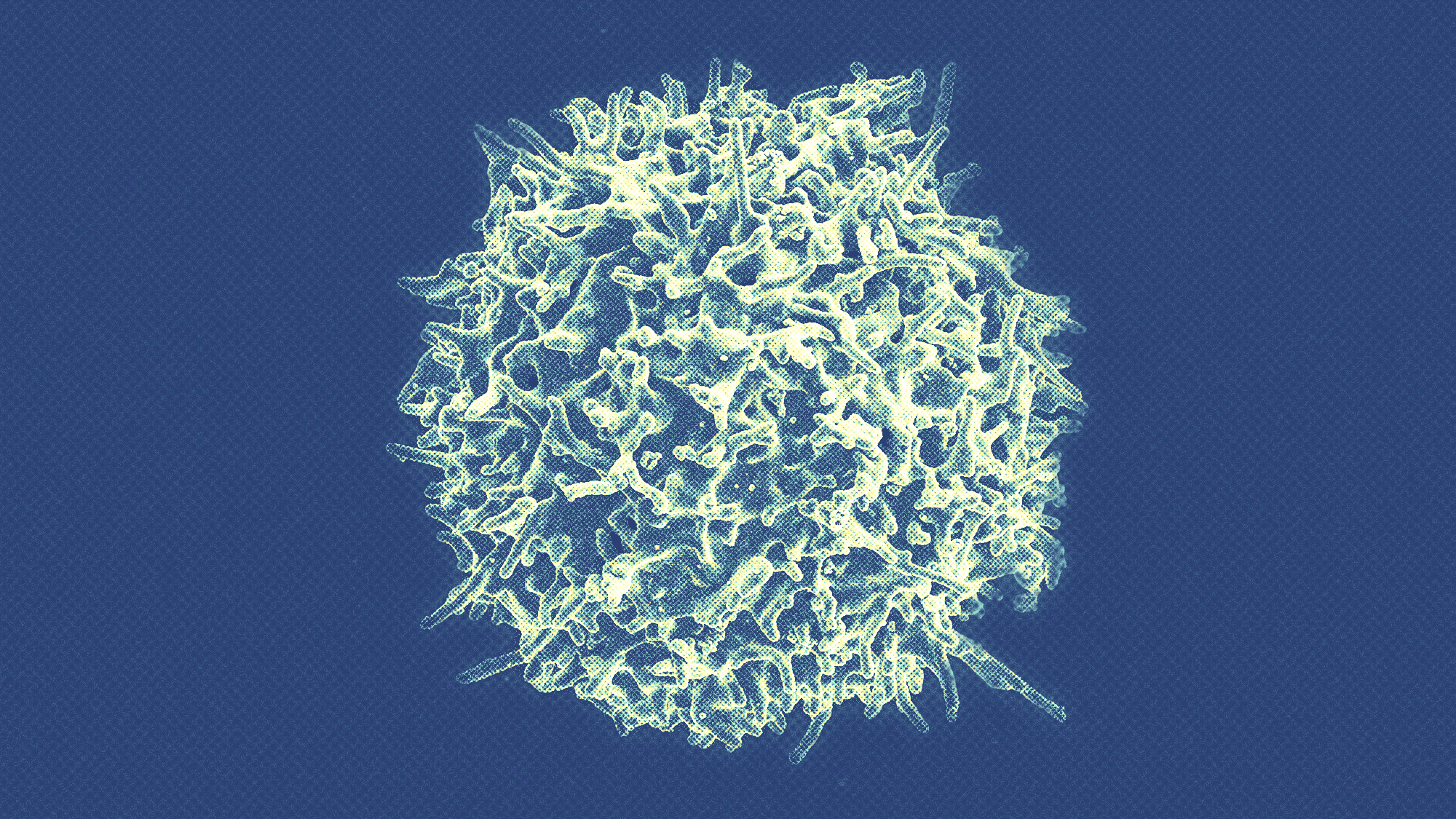
CAR-T therapies could be exactly the kind of factory reset that the immune system needs. The treatment involves reengineering T cells—a type of immune defender—into chimeric antigen receptor T cells (hence, CAR-T) that can kill other cells of scientists’ choosing. In the case of many autoimmune diseases, that means targeting B cells, another variety of immune cell that is commonly responsible for the body mistakenly turning on itself. CAR-T treatments wipe out the misbehaving cells, allowing the body to, theoretically, restock its B cells with ones that leave healthy tissues alone.
So far, that theory has panned out. Early experiments—many of them headed by Müller’s team—suggest that CAR-T therapies can work against several different autoimmune diseases, including myositis, systemic sclerosis, ulcerative colitis, and myasthenia gravis, with few side effects. Across trials, including several recent studies from Müller and his colleagues, most of the dozens of lupus patients that researchers have infused with CAR-Ts have gone into remission, and stayed there for many months. Overall, CAR-T has been astoundingly successful against autoimmune disease, Marcela Maus, the director of the Cellular Immunotherapy Program at Massachusetts General Hospital, told me, especially considering CAR-T’s somewhat spotty track record against certain cancers. These experimental treatments also offer a major lifestyle improvement over traditional management of very severe and complex autoimmune disease, which can entail a lifetime of regularly dosing immunosuppressive drugs. And although CAR-T can trigger extreme inflammatory responses in some cancer patients, those risks don’t seem as common in people with autoimmune disease.
[Read: A ‘crazy’ idea for treating autoimmune diseases might actually work]
Müller’s recent patient still presented a new puzzle—not least because she suffered from three separate autoimmune diseases. In 2014, around the time she had her first son, she’d been diagnosed with autoimmune hemolytic anemia, in which the body rampantly annihilates its own red blood cells. Shortly after, she developed two other autoimmune conditions: one that caused her blood to clot excessively, and another that destroyed platelets, making her more prone to uncontrolled bleeding. Before falling ill, the patient had been active, energetic, “always doing a million things at once,” Müller told me. Within a few years of her diagnosis, though, she was struggling through daily tasks, unable to work, hospitalized for months every year. Her younger son, who’s about 8 years old, knew his mother “only as a sick person,” Müller said. In early 2025, the patient told Müller that she was willing to try whatever he and his colleagues had to offer. With each additional day of intensive, unsuccessful treatment, her risk of a serious complication was rising while her chances of survival were ticking steadily down.
Early last year, Müller and his colleagues extracted the patient’s T cells, programmed them to destroy most of her body’s B cells, and then infused the modified T cells back into her body. Her B cells quickly began to disappear, and within weeks, her bloodwork began to look roughly normal. A year out from treatment, she still has lingering fatigue, and has to undergo weekly bloodletting to purge the iron that built up in her body after receiving so much donated blood. But her outpatient doctor manages that care, and she no longer depends on drugs or blood transfusions. She’s spending time with her children in ways she never could before. As far as Müller’s team can tell, the treatment accomplished the immunological reboot they hoped for: Her body has since produced new B cells, and they so far seem unperturbed by any components of her blood, just as immune cells should be.
Not everyone will be so lucky. CAR-T therapy can cost hundreds of thousands of dollars or more. Germany allows people with serious autoimmune conditions to receive the treatment on the basis of compassionate use, and covers it through the country’s universal health-care system. But in the United States, the only reliable access to CAR-T for those patients comes through sparse clinical trials. Some researchers worry that certain patients won’t stay in remission, perhaps because they carry some sort of predisposition to generate rogue immune cells. And certain autoimmune diseases—especially those that might not hinge on misbehaving B cells—may be harder to treat with CAR-T. Wiping out a lot of T cells, for example, carries a high risk of pushing someone into an immunocompromised state, similar to AIDS, Avery Posey, a CAR-T expert at the University of Pennsylvania, told me. But new developments are in the works that could address some of those issues, Posey said. Scientists are tinkering with new ways to generate CAR-T cells more efficiently and cheaply, including via injections, somewhat similar to vaccines, that can coax patients’ bodies into reprogramming some of their T cells—that is, generating their own CAR-Ts in house. In some cases, the subsets of cells that CAR-Ts target can also be narrowed, so that only the body’s most problematic cells are taken out of commission, while healthy immune cells remain intact.
Müller remains encouraged by the fact that his first autoimmune patient, a young woman with lupus, is still doing well more than five years out from her CAR-T treatment. She’s since gotten her master’s degree and now works at his hospital, running clinical trials; they wave when they glimpse each other in the cafeteria. For now, her immune system seems to be behaving just as it should.