
Older adults regularly report a preference to age in place, and new data show that hospitals are increasingly referring patients to home health providers that allow them to do so.
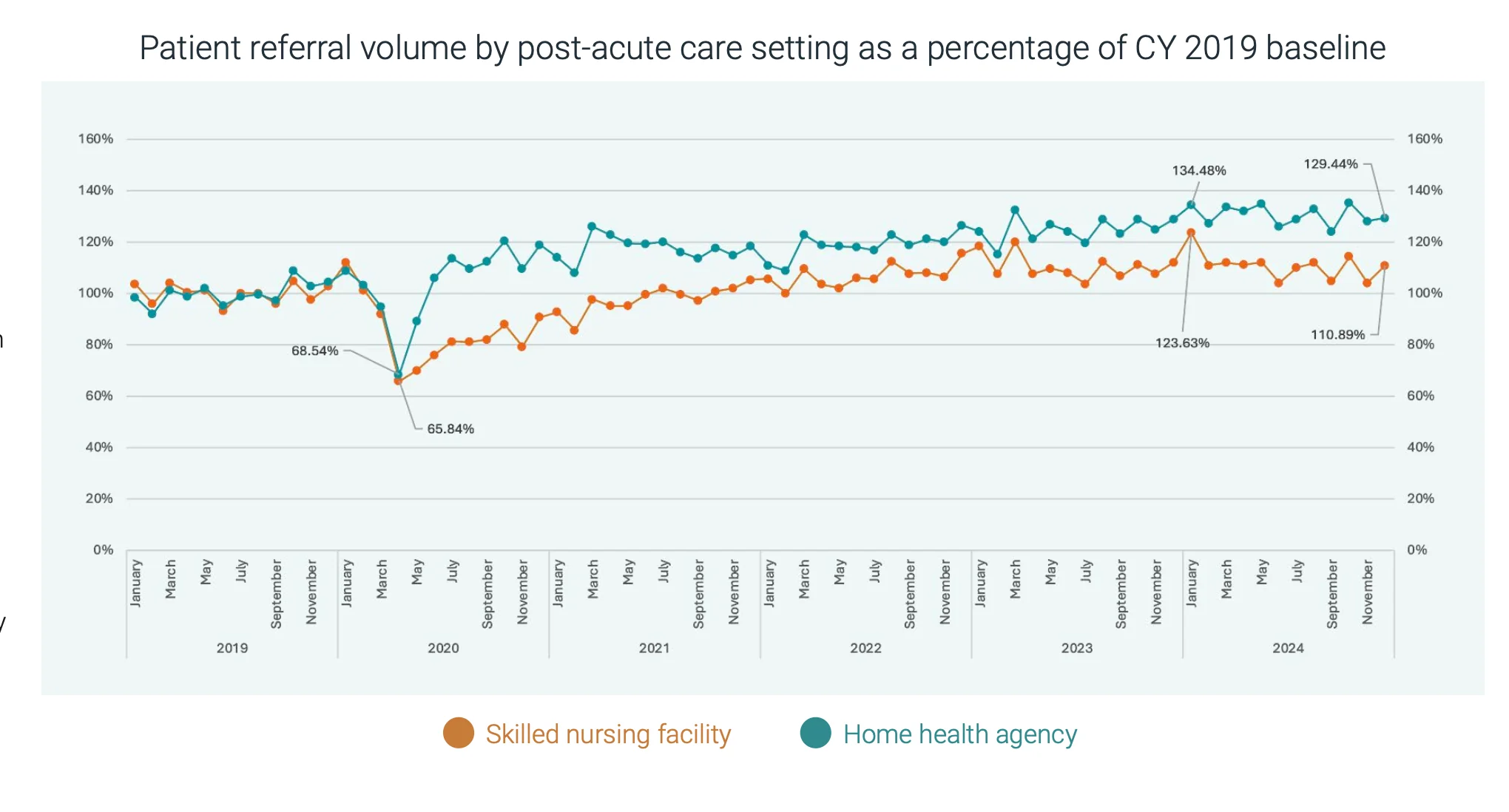
Home health referrals increased 4.6% year-over-year, according to new data from WellSky. The number of overall post-acute referrals has also increased, driven in no small part by home health.
Longer life spans and more complex medical needs mean that people increasingly need some post-acute care, according to the report.
“These shifts are reshaping how care is coordinated – from inpatient settings to discharge planning and transitions into [skilled nursing facilities] (SNFs) and home-based care,” the report read. “Overall post-acute referral volume continues to grow, driven primarily by care settings [other than SNFs] like home health.”
The report is based on data from WellSky’s network of 130,000 post-acute, home and community care providers as well as over 2,500 hospitals, accountable care organizations (ACOs) and physician practices.
 WellSky WellSky
Patient acuity has increased markedly in recent years. The average Van Walraven Index, an indicator of comorbidity burden, has risen by 34% since 2019, according to WellSky, and has increased by 6% since 2024.
“Today’s patients arrive with an ever-growing list of chronic and complex conditions: renal failure, pulmonary circulation disorders, obesity, and behavioral health issues, among others,” the report read. “Notably, data from WellSky shows that the average number of Elixhauser conditions (a widely used index of patient comorbidities) per patient has climbed from 4.30 in 2019 to 4.96 in 2024, a testament to the mounting clinical challenges that care teams are facing across the continuum.”
Increasingly complex patients, along with strained provider capacity, have also driven more referrals to be sent per patient in order to secure them a post-acute placement.
 WellSky WellSky
Rising patient complexity has driven other trends in the home-based care ecosystem. Non-medical providers are increasingly stepping in to care for more acute patients, developing new service lines including cancer and chronic illness care.
Current Health, a home-focused technology company, recently set its sights on caring for more complex, high-risk and acute patients following its split from Best Buy (NYSE: BBY).
To address “acuity creep,” providers have leaned on technology and more value-based care reimbursement models, experts have told Home Health Care News.
“Sicker and more complicated patients require not only a higher frequency of visits and costly supplies, but also additional disciplines such as home health aides and social workers to meet their individual complex health care needs,” April Coxon, executive vice president of quality at Healing Hands Healthcare, previously told HHCN.
The post Home Health Referrals Increase 4.6% Year-Over-Year As Patient Complexity Rises appeared first on Home Health Care News.